Pool Water Chemistry for Arizona Pools: Keep Your Water Clear in Extreme Heat
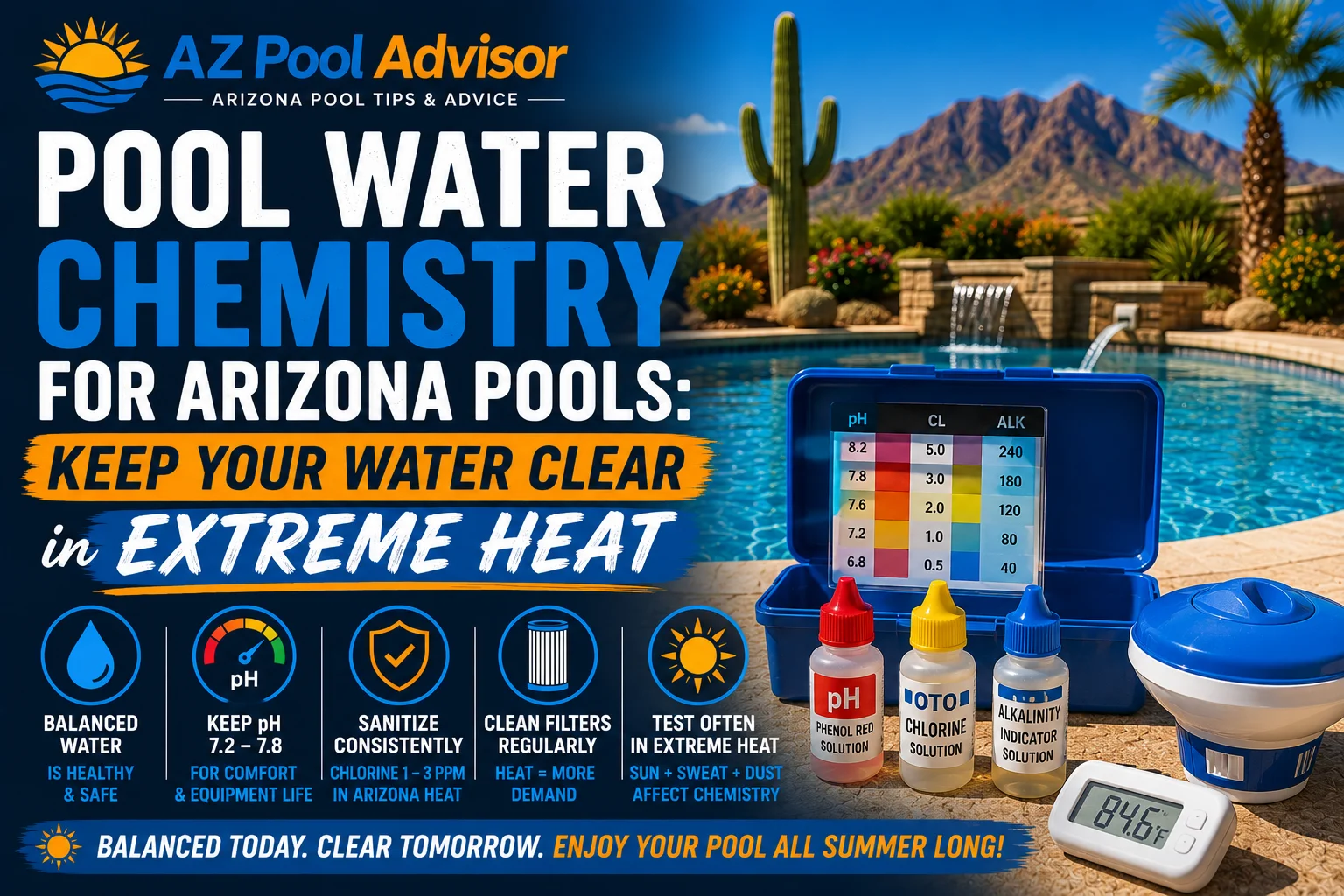
Arizona pools present a chemistry challenge: intense sun, high evaporation, hard ground water, and monsoon storms all push your pool’s balance in different directions. Understanding how pH, alkalinity, sanitizer, calcium hardness, and stabilizer work together will keep your water clear, protect plaster and equipment, and reduce the number of emergency treatments you need.
Why chemistry matters in Arizona
When the thermometer climbs and the sun beats on the surface all day, chlorine burns off faster, pH drifts higher, and minerals concentrate as water evaporates. Hard water common across the Phoenix and Tucson valleys leads to scale on tile and white deposits on plaster. Monsoon season adds leaves, pollen, and dust that increase sanitizer demand and encourage algae. Proper water chemistry reduces eye and skin irritation, prevents equipment damage, and saves money by avoiding frequent drain-and-refill cycles.
The five numbers you should track
Every Arizona pool owner should regularly check these five parameters. Test them weekly during mild weather and twice-weekly or more during summer heat, heavy use, or after monsoon storms.
1. pH (aim for about 7.2–7.6)
pH measures how acidic or basic your pool is. Low pH stings skin and corrodes metal; high pH reduces chlorine effectiveness and promotes scale. In Arizona’s hard-water areas, slight acidity can help prevent scale, but avoid letting pH drop too low.
2. Total Alkalinity (TA) (aim for about 80–120 ppm)
Total alkalinity buffers pH swings. Low TA means pH jumps quickly when you add chemicals; high TA makes pH hard to change. Adjust alkalinity before fine-tuning pH — it’s the control dial for a stable pool.
3. Free Chlorine (aim for 1–3 ppm for residential pools)
Chlorine is your primary sanitizer. In Arizona, maintain the upper end of the range during summer or after heavy bather load, and after monsoon debris events. If you use a salt chlorine generator, expect ongoing chlorine production but still test free chlorine daily when temperatures are high.
4. Cyanuric Acid (CYA) or Stabilizer (aim for 30–50 ppm)
CYA protects chlorine from UV degradation. Too little CYA means chlorine burns off quickly in sunlight; too much reduces chlorine’s sanitizing power. Arizona pools often need a measured CYA level because of intense sun—don’t guess; test and add stabilizer only as required.
5. Calcium Hardness (aim for about 200–400 ppm)
Hard water leads to scale and cloudy water; soft water can etch plaster and corrode fittings. Because municipal and well water in Arizona can be very hard, monitor calcium hardness and use sequestering agents or partial drain-and-refill plans to control buildup.
Practical testing and treatment order
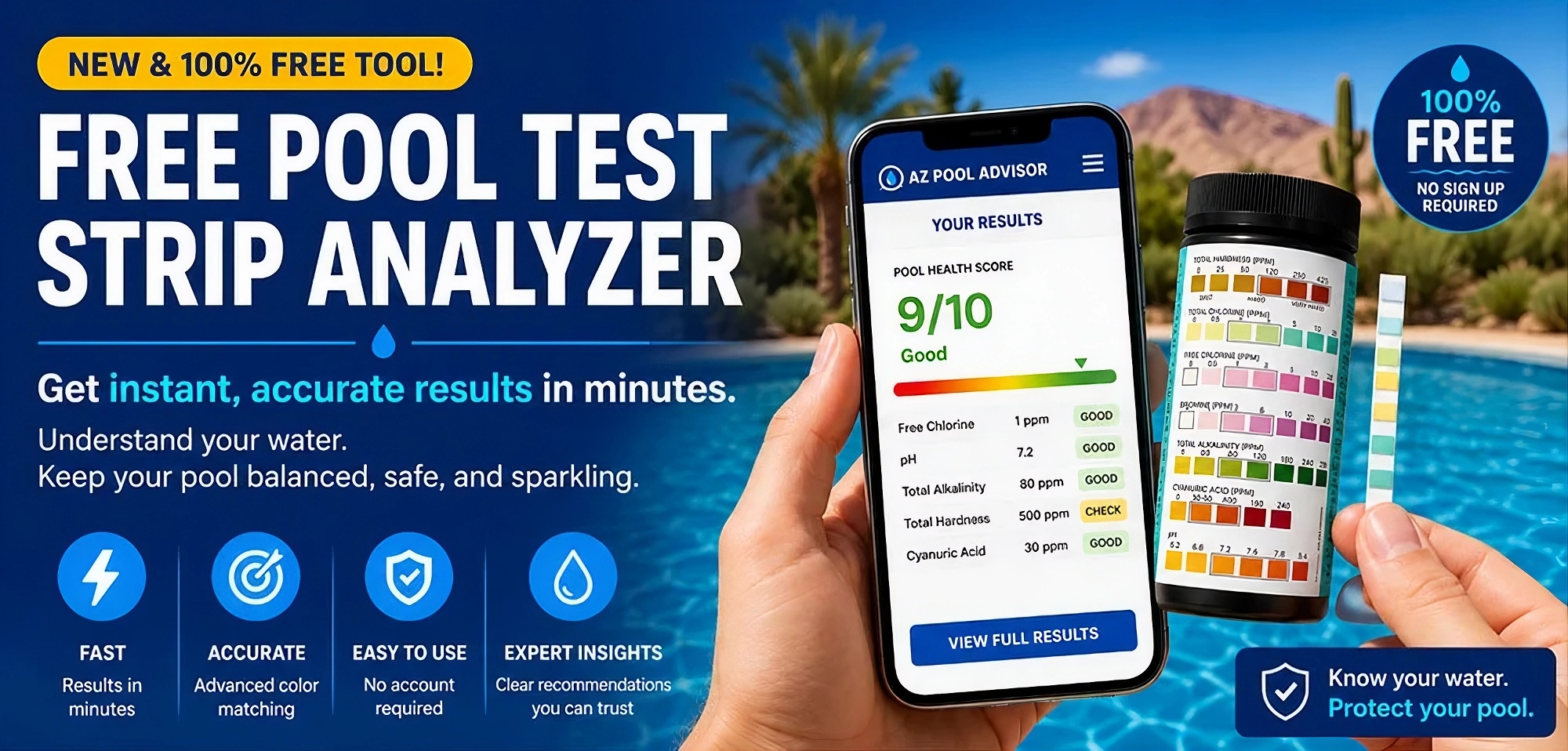
Follow this order when you balance your pool: test, adjust alkalinity, adjust pH, adjust chlorine/stabilizer, then calcium. Fixing alkalinity first makes later pH adjustments predictable. Always follow product labels, add chemicals to water (never pour water into chemicals), and allow circulation and retesting between steps.
Arizona-specific tips
Heat and evaporation
Evaporation concentrates salts and minerals—especially in summer—so your calcium and TDS (total dissolved solids) creep up. Topping off with hard tap water increases mineral load. If you see rapid scale formation or cloudy water, consider a partial drain-and-fill during a cooler month and use a hose with lower hardness where possible.
Monsoon debris and algae risk
Monsoon storms unload organic material and dust into pools. That increases chlorine demand and favors algae. After heavy storms: skim, empty skimmer baskets, run the pump longer, test chlorine and combined chlorine (chloramines), and shock if free chlorine is low or the water looks cloudy. Brushing surfaces prevents debris from hiding in crevices.
Hard water and tile staining
Arizona water commonly contains calcium and other minerals that deposit on tile and grout. Periodic use of a scale sequestering product and keeping pH in the low-to-mid 7s helps. For stubborn mineral rings, use targeted tile cleaners or professional descaling rather than aggressive acid that can damage plaster.
Year‑round pools and equipment care
Many Arizona homeowners use pools nearly year-round. That means maintaining sanitizer continuously—even in winter. Running the pump 6–8 hours daily is a starting point; increase runtime during heat and after storms. Keep filters clean, and watch for unusual equipment noise which can indicate scale or chemical corrosion.
Shock treatment: when and how
Shocking (superchlorination) oxidizes contaminants and destroys chloramines. Shock after heavy bather use, after heavy rain or debris, when algae appears, or if combined chlorine levels exceed 0.5 ppm. Use a non-stabilized pool shock (calcium hypochlorite or sodium hypochlorite products), follow label dosages, and keep people and pets out until free chlorine returns to the safe range you use for swimming—test before re-entry.
Common mistakes Arizona homeowners make
- Only testing once a month. In summer, test weekly or more.
- Adding chlorine but not correcting high pH or alkalinity — reduces treatment effectiveness.
- Ignoring skimmer and pump baskets during monsoon season.
- Letting calcium and TDS slowly rise, then expecting a quick fix.
When to call a pro
Call a qualified local pool company if you have persistent scaling, repeated algae despite proper chemistry, unexplained rapid pH swings, visible corrosion on equipment, or if you’re planning a drain-and-refill. Local pros know municipal and well-water mineral profiles and can recommend a cost-effective plan for sequestering, partial refill, or softening options.
Safety reminders
Store chemicals in a cool, dry place away from children and pets. Never mix chlorine products with acid. Add granular chemicals slowly to water, avoid breathing dust, and always follow label instructions and local disposal rules.
FAQ
How often should I test pool water in Arizona?
Test at least once a week in mild weather and two to three times per week during summer heat, heavy use, or after monsoon storms. Test more often if you use a salt system or chemical automation that can fluctuate.
Why does my chlorine disappear so fast?
Arizona sun (UV) breaks down chlorine quickly, and high bather load, debris, and organics increase chlorine demand. Maintain proper cyanuric acid levels, boost chlorine after storms, and keep water balanced to reduce waste.
Can I lower hardness without draining the pool?
Sequestering agents can temporarily control visible scale, but they don’t remove minerals. Partial drain-and-refill with lower-hardness water is the most effective long-term fix. A professional can advise based on your source water.
How soon can I swim after shocking?
Wait until free chlorine returns to a safe level for swimming and you’ve verified pH is in the normal range. That typically means testing to ensure free chlorine is below your personal or local guideline—test before re-entry.
Arizona pool chemistry is a balancing act, but a predictable one: test more often, adjust in the right order, and be proactive during heat and monsoon season.
Recommended Pool Companies
[evpg_company_cards tag=”pool-water-chemistry”]